
‘Duty, Honor, Country’: The Class of 2026 and MacArthur’s enduring mandate
14 May 2026 2026-05-14 15:57‘Duty, Honor, Country’: The Class of 2026 and MacArthur’s enduring mandate
By Congressman Matt Van Epps, USMA 2005
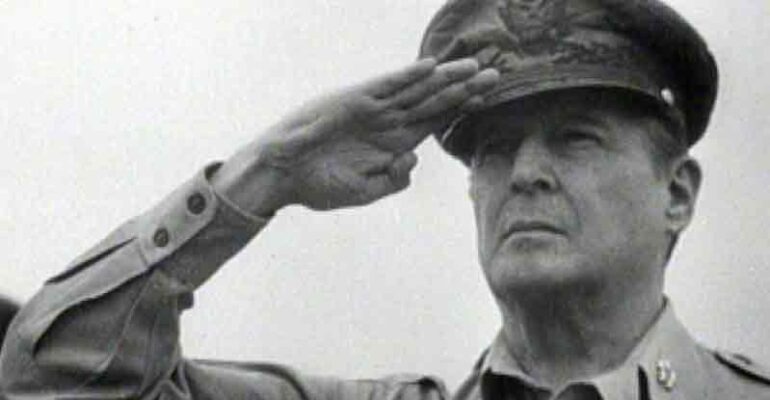
As the Class of 2026 prepares to graduate from the United States Military Academy, I am reminded of the enduring words of Gen. Douglas MacArthur and the standard he set for generations of cadets who have passed through those storied gates.
MacArthur’s “Duty, Honor, Country” speech, delivered on May 12, 1962 — now 64 years ago — was his final address to the Corps of Cadets and remains one of the most consequential speeches in American military history.
It is not simply a historical address; it is a living charge.
As a graduate of West Point, I can attest that those three words are never recited lightly. They are woven into the daily life, discipline and development of every cadet.
They shape how one leads, how one serves, and how one understands the profound responsibility entrusted to officers of the United States Army.
MacArthur himself embodied that standard. A West Point graduate of the Class of 1903, he finished at the top of his class and went on to become one of the most decorated soldiers in American history.
He served with distinction in World War I, led Allied forces in the Pacific during World War II, and later oversaw the occupation and reconstruction of Japan.
He also served as superintendent of West Point, shaping the very institution that would later honor him.
His life was a testament to the ideals he articulated. A life earned through sacrifice and tested in war.
What MacArthur expressed so powerfully is that these ideals are not slogans, but a moral framework.
As he told the Corps, “Duty, Honor, Country: Those three hallowed words reverently dictate what you ought to be, what you can be, what you will be.” They demand courage in moments of doubt, humility in success, and resilience in failure.
During my time at the Academy and throughout my service, I saw how these principles forged leaders who were prepared not only for the battlefield but for the complexities of a rapidly changing world.
As new lieutenants are commissioned this spring, they will carry forward a legacy defined not by personal ambition but by service to something greater than themselves. They join the “Long Gray Line,” inheriting a tradition of sacrifice and excellence that has endured through generations of conflict and peace alike.
At a time when national service can feel distant to many Americans, commencement at West Point serves as a powerful reminder: there are still extraordinary young men and women willing to fight for their country.
In an increasingly dangerous world — where threats from adversarial regimes like Iran continue to challenge stability, and where global competition demands vigilance, the need for principled, capable military leadership has never been greater.
Peace is not preserved by accident. It is secured through strength, readiness, deterrence, and the credibility that comes from a well-trained and well-led force.
Fortunately, we are seeing a renewed interest in service among young Americans, a sign that this next generation understands both the risks of the world they are inheriting and the responsibility they bear in shaping it.
MacArthur once reminded cadets that “[T]he soldier, above all other men, is required to practice the greatest act of religious training — sacrifice.”
That truth remains unchanged. The uniforms may evolve, the threats may shift, but the character required to lead does not.
MacArthur’s words endure because they are true. And for those of us shaped by West Point, they are not just remembered, they are lived.
As another class of West Point graduates is set to graduate this month, it is more important now than ever to recall MacArthur’s legacy and push on, always putting Duty, Honor, and Country first.
_
Matt Van Epps, a Republican, represents Tennessee’s 7th Congressional District in the U.S. House of Representatives. He is a United States Military Academy graduate who served 10 years on active duty as an Army aviator, deploying to Iraq and Afghanistan, and a lieutenant colonel in the Tennessee Army National Guard.

Thursday, Oct 22, 2026
Noon ET / 10:00 am MT via Zoom
Guest Speaker: LTC Robert Maginnis, USA ret, USMA ’73
More Info & Register






“Don’t Give Up the Ship” – Essays by the Calvert Task Group on woke policies endangering our military and nation:
